GUITAR DAD


How many of you are joggers? I'm sure quite a few. Running has always been my favorite form of exercise. Not because it's fun. The activity itself can be pretty dull. What makes it appealing to me is the outdoors, the fresh air, the one-with-nature feeling of literally pounding the pavement. Carrying an iPod loaded with killer tunes heightens the appeal.

Be aware that I never run long distances. Just 2-3 miles at a time. But I do it three times a week religiously, and apparently it's working wonders. My cardiologist (boy, that makes me sound old) tells me I'm in excellent heart health. Just keep doing whatever you're doing, he says. And you can bet I will.




"You're a nincompoop," my 3-year-old daughter told me not long ago. Which says more about how she views her dad than how impressive her vocabulary has grown. When she rises from bed in the morning, I usually try for a hug or just a passing smile. But she issues a sharp "mama!" and makes a beeline for my wife.
 
Just the other day, on my way out the door, I knelt down to say goodbye to my little sweetheart. "I don't like your hair sticking up," she said bluntly, referring to my semi-spiky doo. "OK," I said. "But I love you." No response.
 
Lately I've discovered that telling her off-the-wall stories, ones that involve giants or princesses or frilly desserts, gets her attention. She even approaches me with requests. "Tell me a story, dada." And of course I'm happy to oblige. She'll sit on my lap and listen attentively, interjecting far-fetched details here and there and sometimes taking the tall tale in a whole new direction.
 
After one such storytelling adventure the other night, she followed me around the house for half an hour, just hanging with her dad. "Look, she's your buddy now," my wife said. But the next morning I was greeted with the same chilly reception ("mama!"). I do realize I'm making progress, though, little by little. Who knows, maybe one day she'll want me to teach her how to skateboard, or kick a soccer ball, or play guitar. A dad can dream, right?


I saw this cartoon in today's Orlando Sentinel and cracked up.


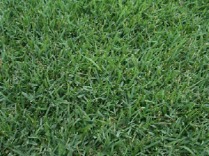
I'll acknowledge up front that writing about sod is totally lame. You'd think a blogger with a cool name like Guitar Dad would enjoy far more thrilling endeavors. And I usually do. Really. Only I'm particularly focused at this moment on the new grass in my backyard.

We just spent a fair chunk of change to install 733 square feet of new St. Augustine turf. You see, our yard has a few "hot spots" that receive virtually no shade and sizzle in Florida's direct sunlight. These spots had grown quite, well, crispy. Our new sod gives our little piece of paradise a much greener and healthier appearance.

I'm dreading our next water bill, though. We've had to run the sprinklers every other day to nurture this fledgling grass, and I've done a great deal of manual hose-spraying as well.

Oh my. Is this what my life has come to – the care and cultivation of sod?


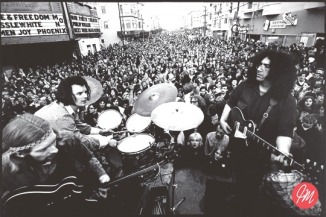
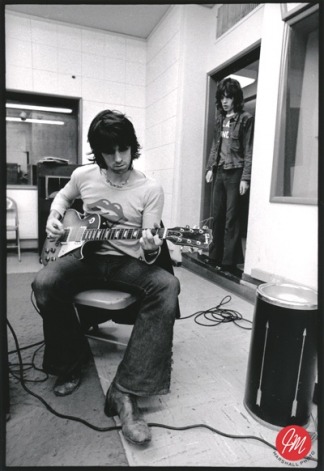
Few photographers have captured the attitude, emotion and spirit of my musical heroes like Jim Marshall has. His legendary images grace countless album covers and magazine spreads. Among my favorite Marshall shots are these three: the Grateful Dead in 1968, jazzman John Coltrane in 1960, and Keith Richards and Mick Jagger in 1972. See more of Marshall's self-described "decisive moments" here.


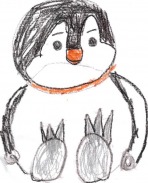
My son is one laser-focused little dude. As a toddler, he cared only about Matchbox cars. Seriously, just cars. Then came other obsessions: Power Rangers, Transformers, Bakugans and now Webkinz.

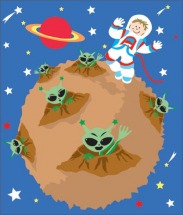
I'm pleased to report that my 6-year-old whiz kid brings similar intensity to his drawing, and he's superbly talented in this regard if I do say so myself. His lines aren't always nice and tidy, but he's exhibiting a real Picasso-like sense of playfulness and ingenuity.

Can you tell I'm a proud dad?


A spacecraft just blasted off from Cape Canaveral on quite an intriguing mission. I watched it slice through the night sky from my front yard, a mere 60 miles from the launch pad.

This spacecraft is on a three-year assignment to scrutinize some 150,000 stars in our galaxy, hunting for evidence of Earth-like planets around those stars. In the most extensive mission of its kind, the Kepler craft (named after 17th century German astronomer Johannes Kepler) may determine whether planets like ours are common in the universe – or so rare that we're essentially all by our lonesome out here.

To nurture life, planets can't be too hot or too cold, and they must contain liquid (not frozen) water on their surfaces. So far, we know of no planets other than Earth with these characteristics. But with billions of stars in our own galaxy and countless galaxies, how can there not be other worlds with the right conditions to sustain life? Guitar Dad suspects there are plenty of other inhabited planets, probably even hosting creatures a bit like us. We'll never meet them, though, because the last time I checked it takes hundreds or thousands of light years to get anywhere in deep space.

Anyhow, I raise my glass to the Kepler mission. May the search for extraterrestrial life yield profound results. For more information about the mission, click here.


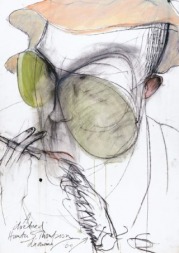
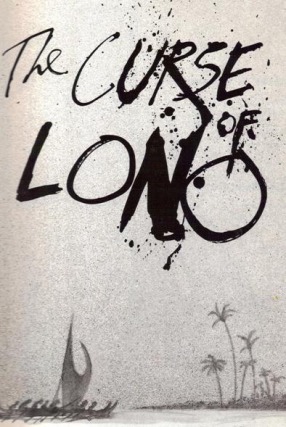
As an admirer of Hunter S. Thompson most of my life, I was severely delighted recently to discover that he'd written a Fear and Loathing-style book about the Hawaiian Islands.
 
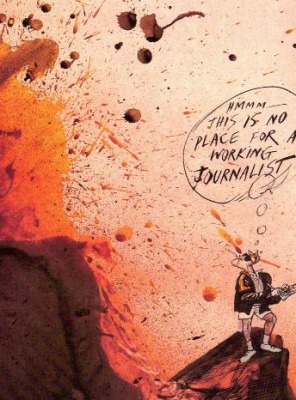
I was pretty sure I'd read everything he'd written, or at least knew about everything. Not so. This book, copiously illustrated by the writer's longtime collaborator Ralph Steadman, was published in 1983 but quickly went out of print. Which makes no sense, because The Curse of Lono is probably Thompson's most enjoyable work.
 
After seeing a number of used copies for sale online for $50 and up, I finally found one for $12.50 at a bookshop in Reno, Nev. It arrived last week and I promptly devoured the sucker. You see, I absolutely love Hawaii and will be forever haunted by its immense beauty and spirit. And I hold in especially high regard Thompson's nearly psychotic and most certainly artificially stimulated approach to journalism. The Curse of Lono combines all of that madness and much, much more.


The Curse of Lono is no love letter to Hawaii, mind you. Early in the book Thompson sets the tone by calling the islands "this harsh little maze of volcanic zits out here in the middle of the Pacific Ocean."

Thompson and his travel partners, in the islands to cover the Honolulu Marathon for a sports magazine, encounter incessantly terrible weather and a series of sordid mishaps that turn expectations of a laid-back vacation into a severe case of raw nerves and, well, fear and loathing. Here's a snapshot:
 
"They call it 'Kona Weather'; gray skies and rough seas, hot rain in the morning and mean drunks at night, bad weather for coke fiends and boat people. A huge ugly cloud hangs over the island at all times, and this goddamn filthy sea pounds relentlessly up on the rocks in front of my porch. The bastard never sleeps or even rests; it just keeps coming, rolling, booming, slamming down on the rocks with a force that shudders the house every two or three minutes."

He describes the treacherous ocean around the Big Island as "Forty thousand feet deep in some places, within sight of the Kona Coast. Eight miles straight down, like falling off a cliff. It would take a long time for a body to sink eight miles down to the ocean floor. It is pitch-black down there, absolute darkness. Not even sharks swim that deep. But they will probably get you on the way down, somewhere in that hazy blue level around 300 feet, where the light begins to fade. Bobbing around on a boat the size of a pickup truck in 40,000 feet of blue water is not a good place to get weird with anybody, much less the captain of the boat. Or even a deckhand. Nobody at all."
 
For me, unearthing this book felt like making the acquaintance of a long, lost friend. An exceptionally entertaining but dangerous, totally wacked-out friend.